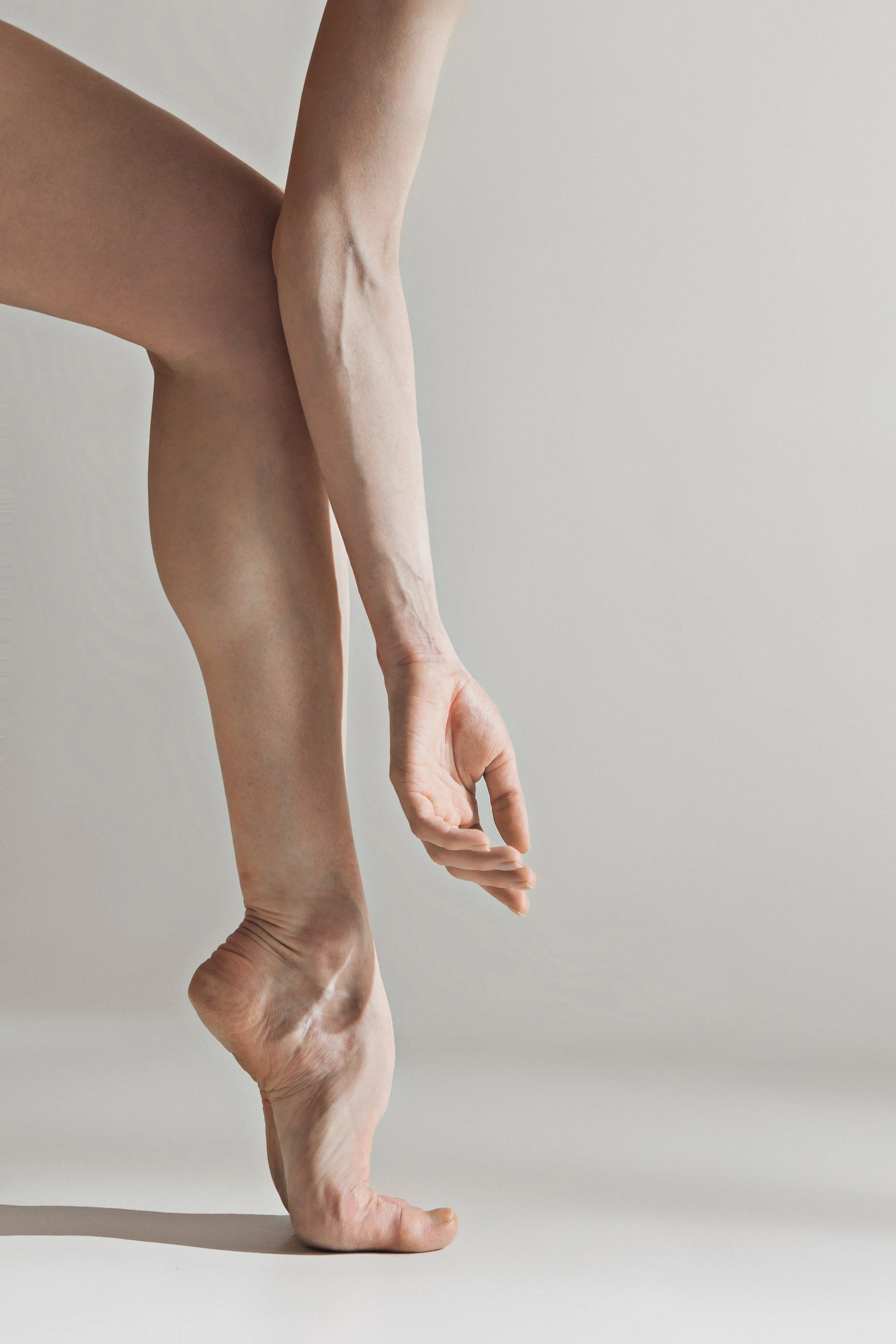
Ballet Podiatrist
Ballet pushes your body to extremes, especially your feet
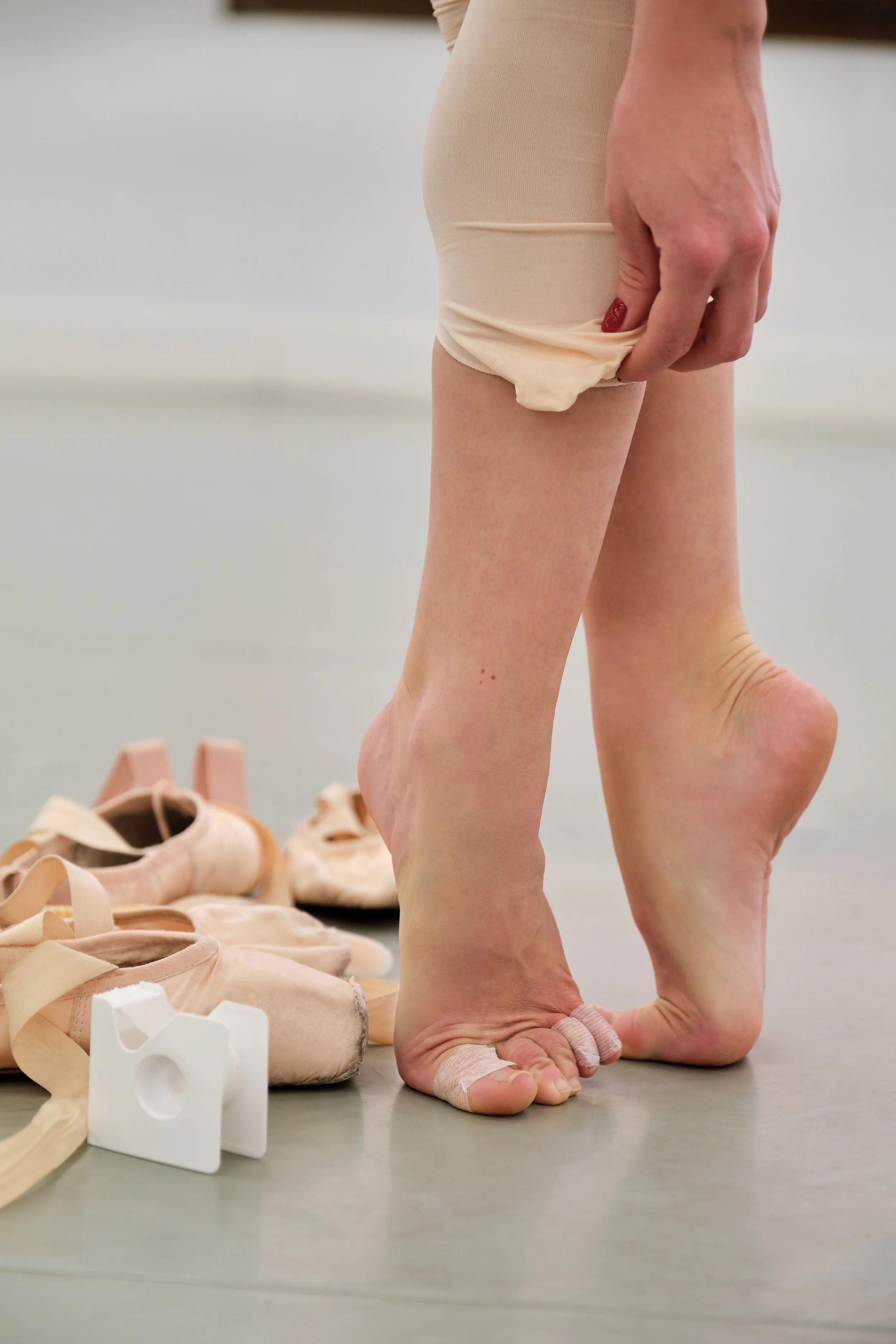
From long hours in pointe shoes to technical demands and repetitive strain, it’s no wonder many dancers experience foot, ankle or lower limb pain. Whether you're struggling with overuse, injury, growth changes or recovery from a fall, I'm here to help you move freely and stay dancing.
Services
-
Biomechanics is all about how your body moves. It is the study of muscles, bones and joints working together.
Biomechanics explores how your feet and lower limbs affect your posture, balance and overall movement, helping podiatrists understand not just where pain is, but why it happens.
Uncovering the root cause of discomfort means I can help you move more comfortably and more efficiently.
-
From neuromas and Plantar Fasciopathy to toe pain or heel discomfort, foot pain can be caused by injury, footwear, medical conditions or circulation issues. I’ll listen to your concern, assess your feet and tailor a treatment plan to ease your symptoms.
-
Warts and verrucae are common skin viruses on the feet. For some people, they can be uncomfortable or just bothersome.
A range of treatment options are available and will be discussed fully prior to any treatment protocol.
-
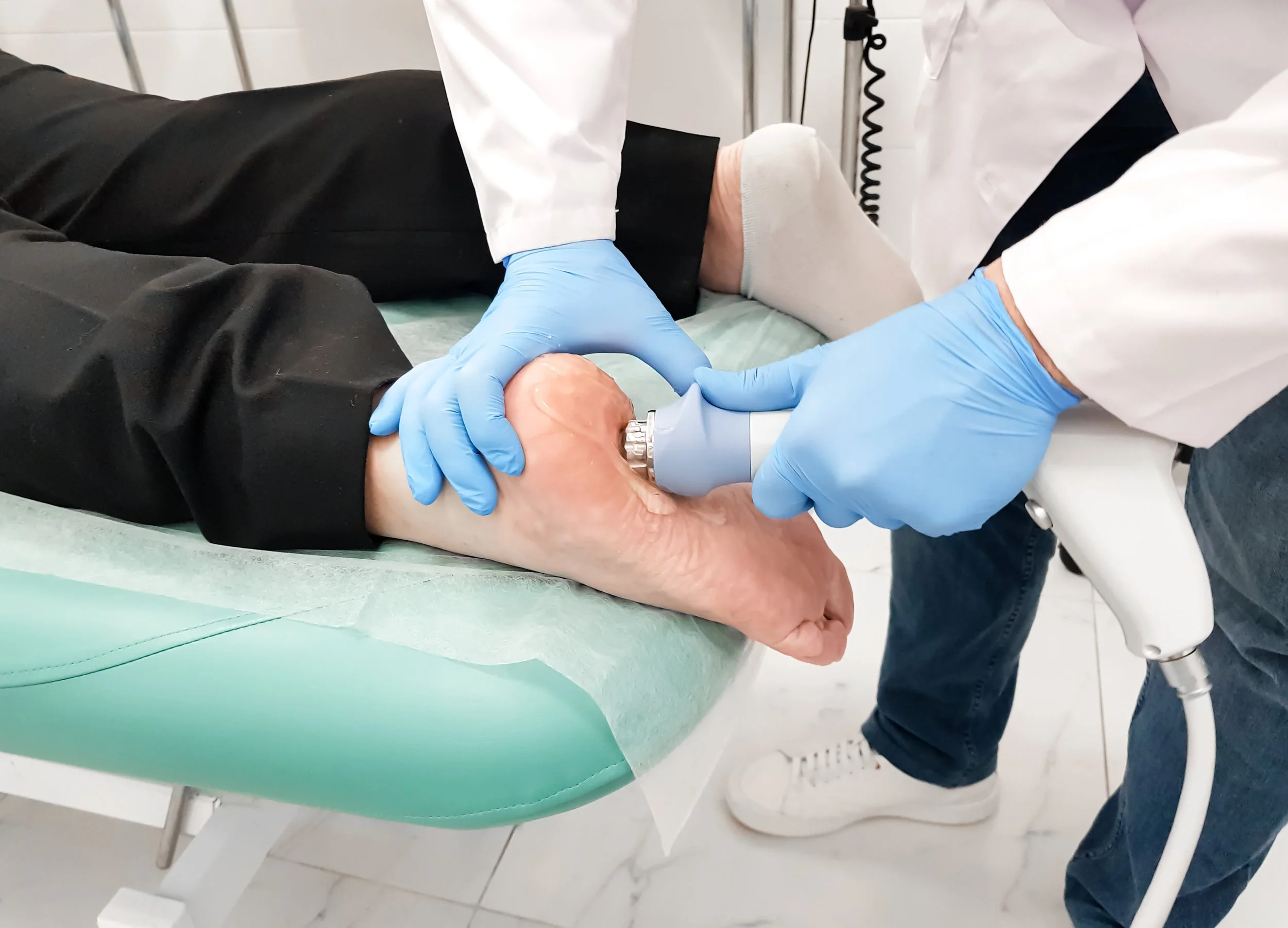
What Is Shockwave Therapy?
The application of high pressure in medicine.
When applied to injured tissues, metabolic reactions occur to initiate healing.
How Does Shockwave Therapy Work?
By increasing blood flow in tissues, and reducing pain by disarming the neural pathways, new stem cells are activated and promote recovery.
-
Ultrasound is a non-invasive imaging technique that uses high frequency sound waves to produce real-time images of soft tissues, joints and bony structures in the foot and ankle.
-
Injection therapy in podiatry is the use of injectable agents such as corticosteroids, local anaesthetics or viscosupplements into specific foot and ankle structures to reduce pain, inflammation, or pathology and to support diagnosis.

-
Orthotic therapy is the prescription and use of insoles placed inside footwear to modify foot and lower limb function.
They can be helpful in redistributing pressure, offloading tissue and relieving pain.
-
Nail surgery offers a permanent or long-term solution to painful, recurrent or problematic toenail conditions that affect mobility, comfort, or health.
-
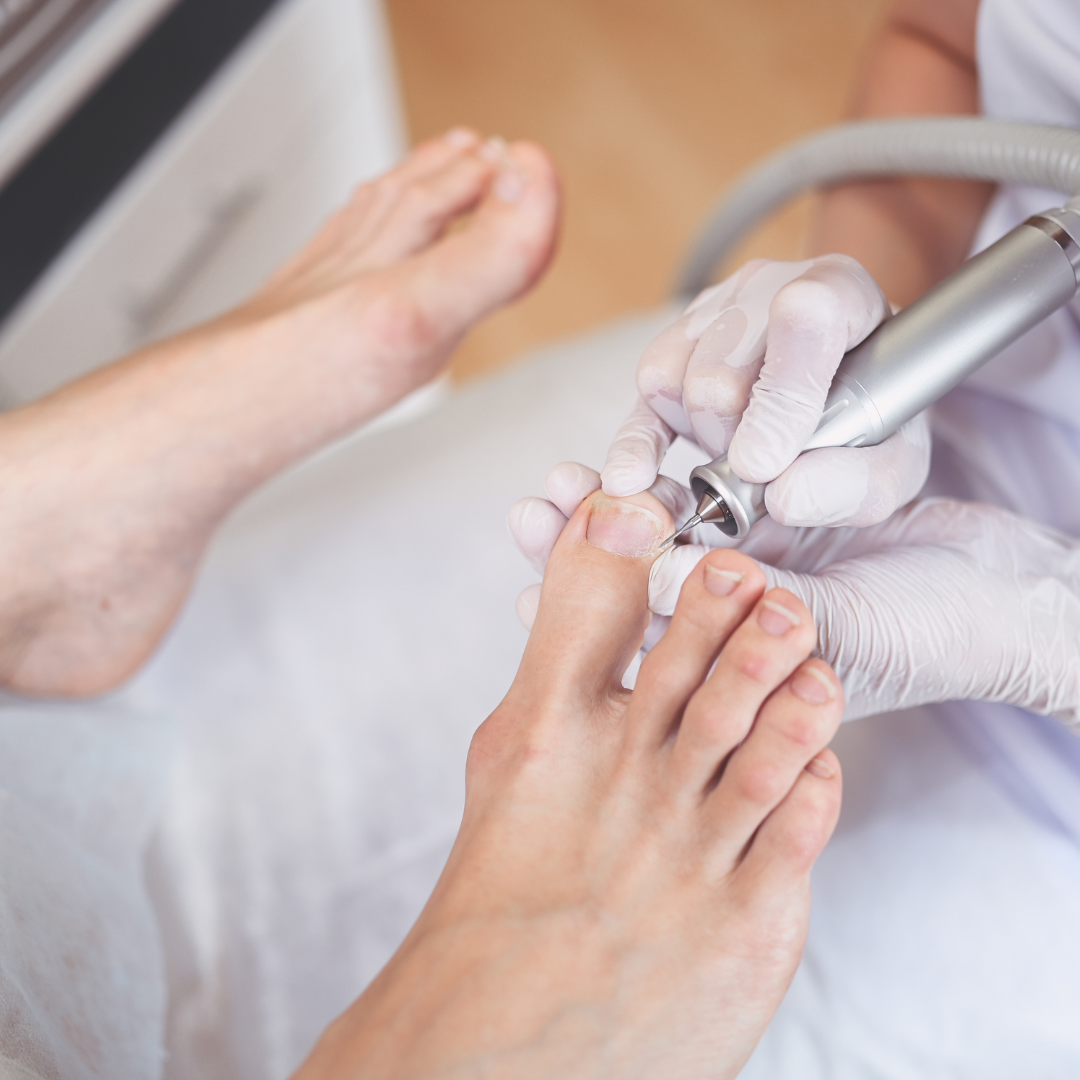
Self-care can be difficult when the problem is hard to reach. If only feet were detachable at the ankles! I can skillfully manage your issues and distract your attention from the blades and drills – promise!
Conditions
-
Dancers are encouraged to seek professional advice from a podiatrist for persistent pain.
Ignoring pain risks developing chronic conditions such as stress fractures, which can lead to prolonged absence from training and performance, structural adaptations and secondary injuries.
-
1 in 10 people develop heel pain and it’s commonly diagnosed as plantar fasciopathy. However, there are approximately 40 other conditions which can affect the heel!
Having a diagnosis is important to establish an appropriate treatment plan.
-
The Achilles is a common site of injury affecting the long tendon inserting into the posterior heel. Diagnostic ultrasound imaging is useful in identifying the extent of pathology and strong evidence informed treatment options are offered to aid recovery.
-
Multiple causes account for toe pain from sudden accidental impact to overuse injuries, ill-fitting footwear leading to corns and blisters, hammertoes, arthritis, bunions and gout, Morton’s neuroma and circulatory problems.
Tailoring management can be improve symptoms and resolve pain.
-
Common causes of ankle pain include sprains, strains, adult-acquired flatfoot, posterior impingement syndrome, fractures, tendonitis, bursitis, and tarsal tunnel syndrome.
I will listen to your concerns and test and clinically assess your ankles to develop a working diagnosis and treatment plan with you.
-
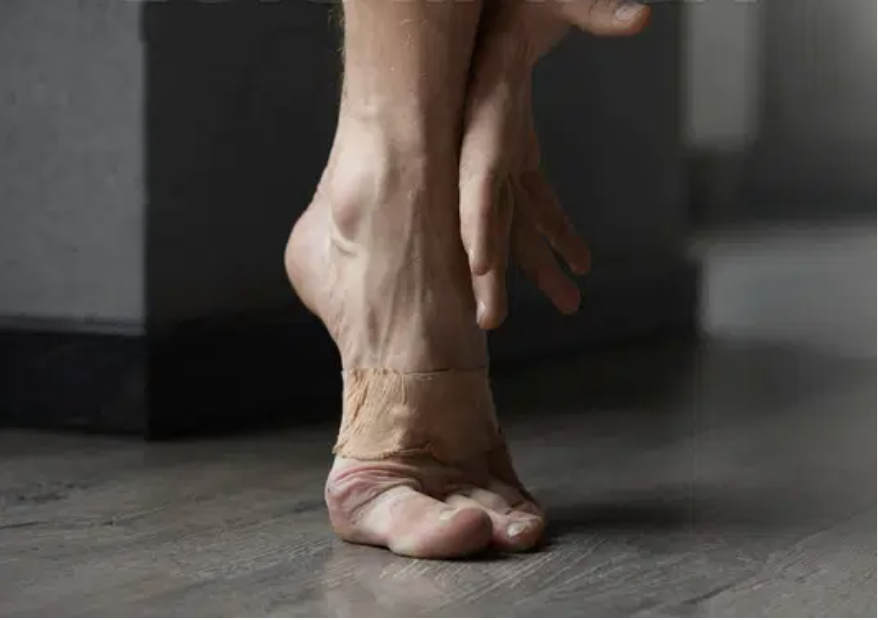
Also termed Adult Acquired Flat Foot (AAFF) or Posterior Tibial Tendon Dysfunction (PTTD), this is a common condition where the foot arch lowers over time. It often relates to natural changes in the supporting tendons and ligaments.
Usually, this condition can be managed effectively with supportive footwear and custom orthoses alongside targeted exercises. Activity and load guidance aims to keep you active while avoiding flare ups.
-
Bunions can be classified from Grade 1 (mild) to 4 (severe). The deformity can limit footwear choice and cause pain or secondary issues due to impaired function at the big toe joint.
Depending on structural or functional limitations and impact on your daily living therapies for managing your bunion might include advanced musculoskeletal analysis, orthotic therapy, injection therapy or even for a surgical opinion.
-
Ingrown toenails are very common. They usually present with pain, redness, swelling and may show signs of infection.
When physical activities are impacted, patients usually seek help. Both conservative and surgical options are available. Podiatrists are in a unique position to resolve ingrown toenails permanently.
-
Warts and verrucae are common skin viruses on the feet. For some people, they can be uncomfortable or just bothersome.
A range of treatment options are available and will be discussed fully prior to any treatment protocol.
-
Multiple causes account for toe and ball of foot pain from sudden accidental impact to overuse injuries, ill-fitting footwear leading to corns and blisters, hammertoes, arthritis, bunions and gout, Morton’s neuroma and circulatory problems.
Tailoring management can be improve symptoms and resolve pain.
-
Fungal skin infections are quite common, especially in active individuals, and usually clear up well with regular use of antifungal treatments. Staying consistent with your routine is key. Even after symptoms improve, some ongoing selfcare may be needed to help keep it from coming back.
-
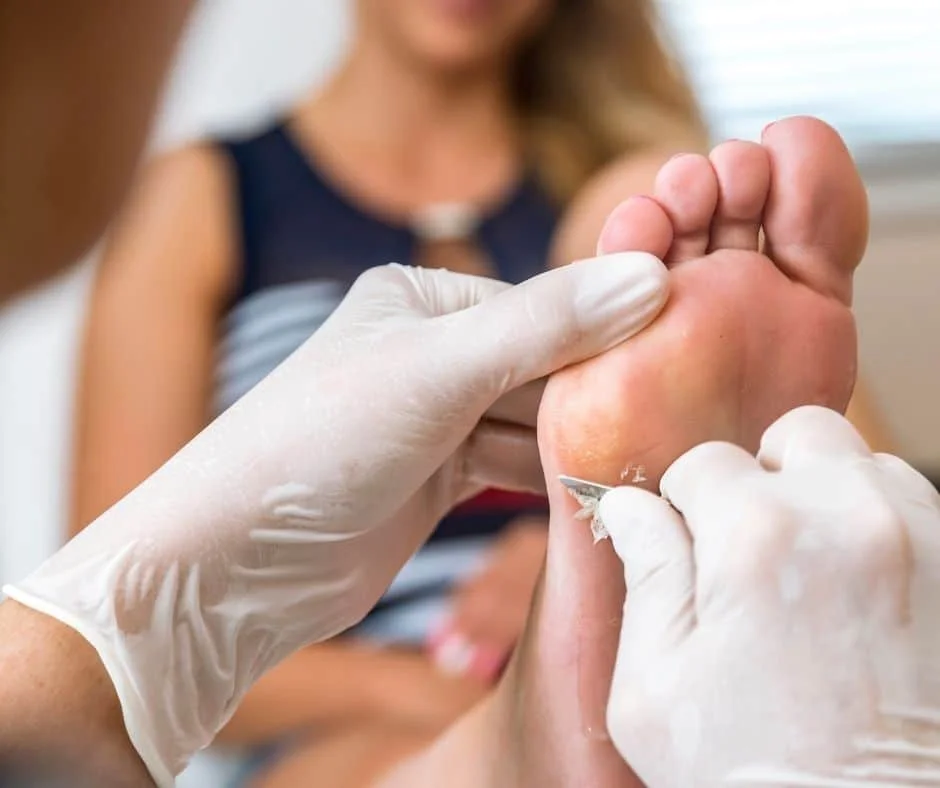
Corns, callus and thickened nails are gently reduced and expertly managed to restore comfort and confidence.
FAQs
-
A healthcare professional specialising in diagnosing, treating and preventing conditions of the feet, ankles and lower limbs.
Think of it this way: a podiatrist is to your feet what a dentist is to your teeth.
-
Chiropodist is the older term, historically focused on basic skin and nail care.
Podiatrist is the modern, internationally recognised title. Training covers biomechanics, sport injuries, diabetic footcare, wound management and minor surgery.
-
Book with me and let’s find out! Foot pain can stem from ill-fitting footwear, prolonged standing, inadequate strength, injuries, arthritic conditions or extreme foot posture.
-
I’ll listen to your concerns, take a medical and lifestyle history and understand your goals and expectations. A physical examination (and sometimes imaging) will follow, along with treatment where appropriate.
Further assessments or treatments may be advised at later appointments.
-
Your treatment may include:
· Footcare advice
· Shoe advice or recommendations
· Orthotic therapy
· Exercise therapy
· Injection therapy
· Shockwave therapy
-
Insoles are either prefabricated or bespoke. They alleviate foot pain by altering forces to offload tissue stress.
Not everyone needs or benefits from orthoses in the same way. Prescribing orthotic therapy is both a science, guided by biomechanics, and an art, tailored to each person’s comfort and lifestyle.
-
Because I provide a service, not just a product. Off the shelf insoles work well for some people, but they don’t come with expert assessment, tailored advice or follow up care.
-
Persistent foot pain is not normal and is miserable.
Podiatrists aim to identify causal factors and recommend treatments to improve quality of life.
-
Not always. Bunions often respond well to conservative care such as appropriate footwear, ice and toe spacers. Surgery may be an option if conservative measures fail.
For example, my own bunions are moderate to severe in appearance, but rarely painful - so I have chosen not to have surgery.
-
· Shoes you actually like (so you’ll wear them!)
· Shoes within your budget
· Comfortable enough that you forget you’ve got them on
· Right for the activity you’re doing
Feel free to ask me for guidance if you think your shoes are part of the problem.
Testimonials
-
![Blue circle with a white letter 'B' and five yellow stars below it.]()
“Penny has been fabulous. She’s got me from hobbling with Planta Fasciitis to being ready to climb Kilimanjaro. I wouldn’t have achieved this without her care. Thank you so much for everything”
Bridget Allerton
Google Review (Maidenhead, 2025) -
![Red gradient circle with a white letter R inside, five gold stars underneath.]()
“5 star experience! Thanks to Penny, at the Bridge Clinic in Maidenhead, she really helped me. Amazing service, I would definitely recommend. Thank you!”
Rosina Joshi
Google Review (South West Podiatry, Maidenhead, 2025) -
![Green and blue gradient circle with the letter K inside, five gold stars below.]()
“I had an amazing experience with Penny Kay when I needed a nail surgery. From the moment I walked into the office, Penny and the entire staff made me feel comfortable and at ease. Penny took the time to thoroughly explain the procedure and answer all my questions before and during and after with the follow up appointments. Thank you!”
Kyle Loughrey
Google Review (South West Podiatry, Maidenhead, 2025) -
![Circle with a green to red gradient background and a white letter P in the center, with five yellow stars beneath it.]()
“Penny did an excellent job in sorting out an extremely painful and infected in-growing toenail on my big toe. It was a procedure I was dreading yet Penny was very clear explaining what was happening. She minimised the pain to effectively zero and did a very very neat job - which immediately rectified the painful issue. I can’t find any fault. A brilliant service and I would highly recommend Penny to all”
Peter Davey
Google Review (South West Podiatry, Maidenhead, 2025)
-
![Gradient circle with a white letter 'N' inside and five gold stars beneath.]()
"My daughter is a dancer and it was great to get clear advice on her persistent in growing toe nail issues from someone who really understands what she needs from her feet. We are very happy with the treatment."
Nicki Stoker
Google Review (South West Podiatry, Earlsfield, 2025)
-
![Green circle with a white letter 'L' in the center, five orange stars below.]()
"Penny was amazing. She treated my achilles with shock wave treatment (results were quite literally life changing!). She was also super helpful with exercises and over and above with shoe recommendations. I wouldn’t hesitate to recommend her."
Lorri May
Google Review (South West Podiatry, Maidenhead, 2024)






To Find Me